How does parental alienation erase the extended family?
By Malcolm Smith · Last updated April 2026 · Based on peer-reviewed research
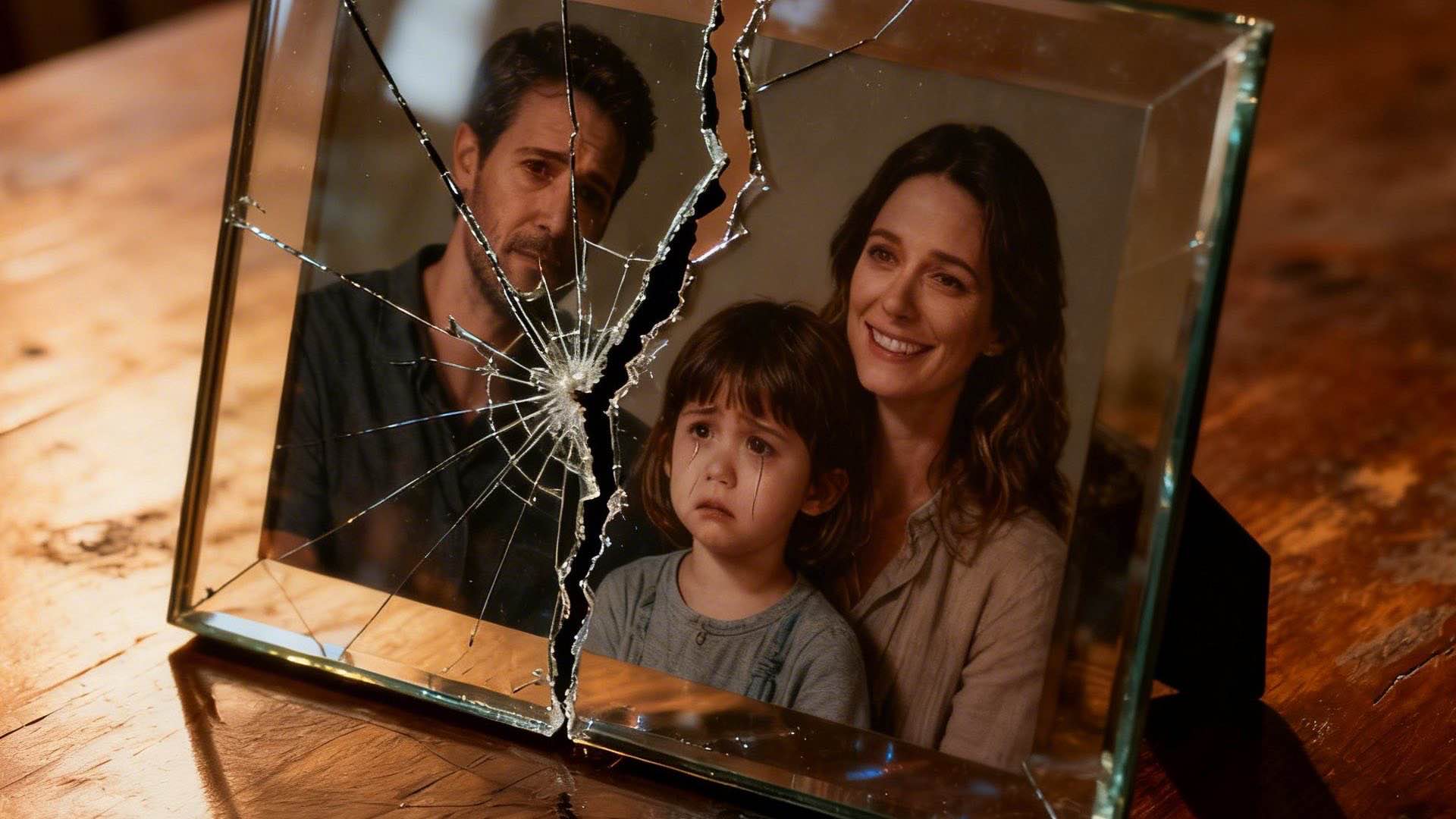
Parental alienation doesn't just sever the bond between a child and one parent — it triggers a cascade of losses that extends far beyond the parent-child relationship. Research documents that alienated children lose access to grandparents, aunts, uncles, and cousins; lose their cultural and religious heritage; lose half their identity narrative; and lose the developmental benefits of having two engaged parents (Baker, 2007; Harman et al., 2018).
What parental alienation takes from a child
| Category of Loss | What Is Lost | Why It Matters |
|---|---|---|
| A parent | Daily presence, guidance, love, and modelling from the targeted parent | Children need two engaged parents for healthy development (Bowlby, 1969) |
| Extended family | Grandparents, aunts, uncles, cousins on the targeted parent's side | An entire branch of the family tree is severed |
| Cultural heritage | Language, traditions, religion, ethnicity from one side | Half of the child's cultural identity is erased |
| Identity narrative | Accurate knowledge of who they are and where they come from | The child's life story is rewritten by the alienator |
| Childhood itself | Freedom to love both parents without fear | Replaced by hypervigilance, performance, and adult burdens |
| Future relationships | Healthy template for trust, love, and conflict resolution | The only template they learn is the cut-off (Baker, 2007) |
| The person they were meant to become | Authentic self, uncorrupted by the false self | The child becomes who the alienator needs them to be, not who they are |
Dr Jennifer Harman's researchdocuments what many targeted families already know: alienated children lose not only a parent but entire branches of their family tree. Contact is restricted, narratives are rewritten, and grandparents, aunts, uncles, and cousins quietly disappear from the child's life.
Researchers describe this as a "cascade of losses" — a framework from Harman, Matthewson & Baker (2022) documenting five distinct categories of loss experienced by alienated children:loss of individual self,loss of childhood and innocence,loss of a "good enough" parent,loss of extended family, andloss of community. Each loss feeds the next. The child doesn't just lose you — they lose the entire ecosystem of connection that your presence in their life sustained.
This is Gardner's eighth manifestation — the "spread of animosity" — in its most devastating form. In the alienator's black-and-white worldview, anyone connected to you is "contaminated." Loving grandparents who have never done anything wrong are cut off solely to ensure you have no allies. The child who once ran to Grandma's door or played with cousins at family gatherings now treats these same people with cold indifference or outright hostility. Not because anything happened between them, but because they are associated with you.
As adults, survivors of alienation mourn these losses deeply. Baker (2007)documents their grief for grandparents who faded into silence, cousins and siblings from whom they were separated, and family traditions and histories that were censored — leaving the child with only half an identity.
How does parental alienation hurt grandparents?
Dr Edward Kruk's research provides a critical distinction between the natural distancing that occurs when families live apart and the traumatic rupture of alienation. In natural distancing, the bond fades gradually and the grandparent is missed. In alienation, the bond is actively severed. The grandparent is not just missed — they are erased from the family narrative.
Kruk's study reveals that this specific type of rupture results in disenfranchised grief — sorrow that is not acknowledged by society. There are no support groups for alienated grandparents. No condolence cards. No social framework for mourning a grandchild who is alive but unreachable. This is what Pauline Boss (1999)describes as ambiguous loss — grief for someone who is physically present but psychologically absent.
Perhaps the most haunting finding is the cycle. Many alienated grandparents were once alienated parents themselves. The alienated child grows up to become the alienating parent, using the only relationship template they know: the cut-off. The grandparent watches their own history repeat itself — losing their grandchildren the same way they once lost their children.
"The grandparent who is alienated does not just lose a grandchild. They lose the final proof that everything they endured had meaning — that the family line continued, and that love survived."
Siblings divided
One of the least discussed consequences of alienation is what it does to siblings. In some families, children are split — one aligning with the alienating parent, another maintaining emotional connection with the targeted parent. The family fractures not only vertically (parent versus parent) but horizontally (sibling versus sibling).
Research by Mark Feinberg shows that sibling bonds are deeply shaped by perceived favouritism and chronic family stress. In alienation, children learn — sometimes without a single explicit word — that closeness itself can be dangerous when loyalty is being monitored. A child who shows warmth toward the rejected parent risks becoming the next target.
Even when siblings remain in physical contact, something essential is often lost: the shared, unspoken understanding of family history. The family story no longer belongs to everyone. It becomes contested terrain, with each sibling holding a different version of the truth — and no safe space to reconcile them.
Community and cultural ties severed
Parental alienation is rarely a solo act. It relies on a network of enablers, bystanders, and unsuspecting allies. The alienating parent uses triangulation to recruit a "tribe" of supporters through whisper campaigns and what psychologists call "flying monkeys" — people who carry the alienator's message without understanding its purpose.
The result is what researchers describe as the "Greek Chorus Effect." The child is surrounded by voices — teachers, family friends, the alienator's relatives — all reinforcing the same narrative. Your other parent is unsafe. Your other parent did something terrible. Your other parent does not really love you. When every trusted adult in a child's world is singing the same song, what chance does the child have of hearing a different melody?
For children whose parents come from different cultural, ethnic, or religious backgrounds, the loss cuts even deeper. The child doesn't just lose a parent — they lose an entire language, a set of traditions, a religious heritage, a national identity. Half of who they are is declared irrelevant or dangerous. In families where alienation is driven by a religious community — as in Malcolm's own experience — the child may lose not just the targeted parent but the very possibility of a worldview that is not controlled by a single authority.
Meanwhile, the targeted parent undergoes a "tribal split." Friends who once belonged to both parents are forced to choose sides. Mutual friends drift away. The targeted parent is severed from the entire information loop — missing school plays, medical updates, and the casual chatter of other parents. They become a ghost in the very community where they once raised their child.
How does parental alienation cause intergenerational trauma?
One of the most haunting legacies of parental alienation is the long shadow it casts over the survivor's future family. Baker's research reveals three distinct patterns in how alienation shapes survivors' approach to parenthood:
Avoidance as protection
Some survivors choose not to have children at all, paralysed by the fear of rejection. Having experienced the worst that a parent-child relationship can become, they cannot bring themselves to risk it again.
Parenting from fear
Others become parents but misinterpret normal developmental milestones as signs of abandonment. When their teenager rolls their eyes, the survivor does not see independence — they see rejection. When their toddler clings to the other parent, they do not see healthy attachment — they see the beginning of the end.
The trap of learned control
The most painful pattern: some survivors unconsciously repeat the alienation behaviours themselves — demanding total loyalty or becoming possessive — simply because they were never taught what healthy, non-possessive love looks like. The cycle continues not out of malice, but out of the absence of any other model.
The person they might have been
Baker's research consistently surfaces the same grief among adult survivors: the deepest loss is not the targeted parent, devastating as that is. It is the loss of the child they might have been.
They grieve the version of themselves that was allowed to love freely. The version that felt safe. The version that was not forced to pay such a terrible price just to be loved by a parent. They grieve the childhood that was stolen — not by poverty or illness or circumstance, but by a deliberate act of emotional violence committed by someone who was supposed to protect them.
Alienation distorts children's understanding of relationships themselves. It teaches them that love is conditional, that loyalty must be proven, and that people are either entirely good or entirely bad. These lessons do not stay in childhood. They shape every relationship the child will ever have — until someone, or something, helps them unlearn them.
"The alienated child does not just lose a parent. They lose the person they were meant to become."
Frequently asked questions
What does an alienated child lose beyond the targeted parent?
An alienated child loses entire branches of their family tree — grandparents, aunts, uncles, cousins — as well as community ties, cultural identity, and their own authentic self. Adult survivors mourn the loss of the person they might have been as deeply as the loss of the parent.
How does parental alienation affect grandparents?
Alienated grandparents experience disenfranchised grief — sorrow not acknowledged by society. There are no support groups, no condolence cards, and no social framework for mourning a grandchild who is alive but unreachable.
Can parental alienation be passed to the next generation?
Yes. Baker's research reveals three patterns: avoidance of parenthood, parenting from fear, and unconscious repetition of alienation behaviours. The cycle continues when survivors have no alternative model for healthy relationships.
What is ambiguous loss in parental alienation?
Pauline Boss defined ambiguous loss as grief for someone who is physically present but psychologically absent, or vice versa. In alienation, the child is alive but unreachable — creating grief that has no resolution and no social recognition.
References
- Baker, A. J. L. (2007). Adult Children of Parental Alienation Syndrome: Breaking the Ties That Bind. W. W. Norton & Company. Publisher · In catalogue
- Boss, P. (1999). Ambiguous Loss: Learning to Live with Unresolved Grief. Harvard University Press. Publisher
- Bowlby, J. (1969). Attachment and Loss: Vol. 1. Attachment. Basic Books. APA PsycNet
- Harman, J. J., Kruk, E., & Hines, D. A. (2018). Parental alienating behaviors: An unacknowledged form of family violence. Psychological Bulletin, 144(12), 1275–1299. DOI: 10.1037/bul0000175 · PubMed · Summary
- Kruk, E. (2013). The Equal Parent Presumption: Social Justice in the Legal Determination of Parenting After Divorce. McGill-Queen's University Press. Publisher
- Harman, J. J., Matthewson, M. L., & Baker, A. J. L. (2022). Losses experienced by children alienated from a parent. Current Opinion in Psychology, 43, 7–12. PubMed
See the full curated bibliography on our research page.