Parental Alienation Is Family Violence: The 2018 Harman/Kruk/Hines Paper That Changed the Field
A plain-language summary of the authors' 2018 research in Psychological Bulletin — Parental alienating behaviors: An unacknowledged form of family violence.
Summarised by Malcolm Smith on behalf of Love Over Exile. Last updated 29 April 2026. Reviewed against the published primary source (DOI 10.1037/bul0000175).

TL;DR
- Headline reframing · PA as family violence in Psychological Bulletin. Harman, Kruk & Hines (2018) re-classified parental alienating behaviours as a form of family violence — specifically child psychological abuse (against the child) and intimate partner violence (against the targeted parent). The paper was published in Psychological Bulletin, the American Psychological Association's flagship review journal.
- What the paper is · Conceptual review, not meta-analysis. It is a conceptual review, not a meta-analysis. The authors did not count studies or run experiments. They showed that parental alienating behaviours already meet the existing public-health and legal definitions of family violence once those definitions are applied consistently.
- The 'intimate terrorism' framing · Custody as the lever of coercion. The central framing is 'intimate terrorism' — Michael P. Johnson's IPV subtype describing asymmetric coercive control. In parental alienation, court-awarded custody becomes the lever of coercion and the child becomes both the weapon and the casualty.
- Gendered assumptions corrected · Custodial status, not gender, predicts. There is no significant gender difference in who alienates versus who is targeted. Custodial status — not gender — is the stronger predictor. This contradicts the persistent assumption that alienators are predominantly women.
- Critic context · Mercer, Meier, Varavei + the Sharples 2025 rebuttal. Critics (Mercer 2022, Meier 2022, Varavei 2025) dispute the family-violence classification on definitional and weaponisation grounds. Subsequent empirical work — notably Sharples, Harman & Lorandos (2025) — has reinforced the classification by finding that alienating parents are 81% more likely to have substantiated abuse claims against them, not less.
The Study at a Glance
| Authors | Harman, J. J., Kruk, E., & Hines, D. A. |
|---|---|
| Published | 2018 |
| Journal | Psychological Bulletin, 144(12), pp. 1275–1299 |
| Method | Narrative/conceptual review mapping parental alienating behaviours onto existing public-health and legal definitions of child abuse and intimate partner violence (specifically the 'intimate terrorism' subtype from Johnson's IPV typology). |
| DOI | 10.1037/bul0000175 (open) |
| Full paper | View primary source → |
Love Over Exile is a plain-language research archive on parental alienation, written by Malcolm Smith — an alienated parent and author of the forthcoming book Love Over Exile — for non-specialist readers (other alienated parents, family members, therapists, lawyers) who want to understand the evidence base without a psychology degree or a journal subscription. This page is one entry in that archive.
Definition · Parental alienation
Parental alienation is a pattern of behaviour in which one parent systematically damages a child’s relationship with the other parent — through manipulation, denigration, manufactured fear, or interference with contact — to the point where the child rejects the targeted parent without legitimate cause.
Working definition consistent with Bernet & Greenhill’s Five-Factor Model (2022) and the family-violence framework formalised by Harman, Kruk & Hines (2018) — the paper this article summarises.
What the Researchers Asked
The question behind this paper is deceptively simple. If what happens to alienated parents and their children looks like family violence, causes the same kind of harm as family violence, and meets the criteria professionals use to classify family violence — why does it not count as family violence?
That is the question Jennifer Harman, Edward Kruk and Denise Hines set out to answer in Psychological Bulletin at the end of 2018. Three psychologists — from Colorado State University, the University of British Columbia, and (at the time) Clark University — writing in the American Psychological Association’s most prestigious review journal. They were not arguing for a new diagnosis. They were not announcing new data. They were asking, with unusual directness, why a pattern of harm this well-documented had been allowed to sit outside the family-violence framework for four decades.
The paper’s core claim is classificatory. Family violence has been defined for half a century by a stable set of public-health and legal criteria: intentionality, pattern, significant injury, and — in the intimate-partner-violence literature — asymmetric coercive control. If you take those criteria and apply them honestly to the behaviours parents engage in when they alienate a child from the other parent, the behaviours qualify. Not by analogy. By the definitions the field already uses.
For a targeted parent reading this, the question behind the paper matters. You have probably been told, directly or in subtext, that what is happening to you is “a difficult divorce”, “a high-conflict situation”, “two parents who can’t get along”. Those framings treat your experience as unfortunate but symmetric — a relationship problem.
Harman, Kruk and Hines say: no. What is happening to you is not symmetric. It is violence. You are not wrong to experience it that way.
What They Did — Methods in Plain English
To understand what this paper proved, it helps to understand what it is. And what it is not.
It is not a meta-analysis. A meta-analysis statistically pools data from dozens or hundreds of prior studies to generate a single summary effect size. This paper does not do that.
It is not a systematic review in the strict sense either. A systematic review catalogues every study meeting pre-registered inclusion criteria and reports what the collective evidence shows. This paper does not do that either.
What it is, is a conceptual review. The authors’ method is closer to a legal argument than an experiment. They take three steps.
First, they establish the definitions. What, precisely, do public-health bodies, legal scholars and the family-violence research community mean by “family violence”? What are the criteria for child maltreatment? What are the criteria for intimate partner violence?
The paper does not invent anything here. It catalogues the existing, widely-accepted definitions — from the CDC, the WHO, the major child-protection frameworks and the IPV literature descended from sociologists like Michael P. Johnson.
Second, they catalogue the behaviours. What do parents actually do when they alienate a child from the other parent? The paper assembles an index from the existing research — Baker’s seventeen strategies, Gardner’s original observations, Warshak’s framework, Darnall’s alienator typology. The behaviours are not controversial to describe. They are documented across decades of clinical observation and empirical research: badmouthing the other parent, manufacturing fear, sabotaging contact, punishing the child for showing warmth, using custody as leverage.
Third, they show the match. Behaviour by behaviour, definition by definition, they demonstrate that the catalogue of alienating behaviours meets the criteria for both child psychological abuse and intimate partner violence.
That is the method in one sentence: take established definitions, apply them honestly to established behaviours, and show the answer the field has been avoiding.
One thing the paper is not is a count of the research base. You may have encountered the claim that Harman, Kruk and Hines reviewed “213 empirical studies across 10 languages”. That claim appears on many websites, including — until recently — on ours. It is a misattribution.
The “213 studies across 10 languages” figure comes from a different paper: the 2022 scientific-status review by Harman, Warshak, Lorandos and Florian in Developmental Psychology. Both papers matter, but they are distinct works. The 2018 paper you are reading about here is the classificatory one; the 2022 paper is the evidence-base scoping review.
A good rule: the 2018 paper reframed, the 2022 paper counted.
2018 paper vs. 2022 paper — what each one actually does
This comparison table is the single fastest way to keep the two papers straight. Both are by Jennifer Harman as lead or co-author. They are routinely confused with each other in citations on the open web — including, until recently, on this site.
| Harman, Kruk & Hines (2018) | Harman, Warshak, Lorandos & Florian (2022) | |
|---|---|---|
| Journal | Psychological Bulletin, 144(12) | Developmental Psychology, 58(10) |
| Type | Conceptual / classificatory review | Scientific-status / evidence-base review |
| Method | Apply public-health and IPV definitions to alienating behaviours | Survey 213 empirical PA studies across 10 languages |
| Question answered | Should PA be classified as family violence? | Is PA scientifically established? |
| Key contribution | Reframes PA as child psychological abuse + intimate terrorism | Documents the empirical base supporting that reframe |
| Famous figure it produced | The “intimate terrorism” framing | The “213 studies in 10 languages” claim |
| What it does NOT do | Count studies, produce prevalence data, run meta-analysis | Reframe — it tests the existing reframe against the empirical record |
| DOI | 10.1037/bul0000175 | 10.1037/dev0001404 |
The classification at a glance
The paper’s argument can be drawn in a single diagram. Each step of the chain is documented in the existing literature; the paper’s contribution is putting them in the same picture.
Figure 1. The 2018 classification chain. Alienating behaviours that meet four documented family-violence criteria qualify, in the paper’s argument, as a single category (family violence) with two simultaneous victims — the child (psychological abuse) and the targeted parent (intimate terrorism). Diagram by Love Over Exile, after Harman, Kruk & Hines (2018).
What They Found — Six Key Findings
1. Parental alienating behaviours meet the public-health definition of family violence
The first finding is the argument’s foundation. The CDC’s and WHO’s public-health definition of family violence has four parts: the behaviour must be intentional, it must follow a sustained pattern (not a one-off event), it must cause significant injury to the victim, and — in the case of intimate-partner violence — it must occur within an intimate-partner context.
Harman, Kruk and Hines apply these criteria one at a time. Alienating behaviours are intentional — the alienating parent is aware of what they are doing, even when they rationalise it as protecting the child. They follow a sustained pattern — alienation rarely happens in a single incident; it unfolds over months and years. They cause significant injury — a body of developmental, attachment and trauma research documents psychological and physical consequences as severe as those caused by other recognised forms of abuse. And they occur within what is, by definition, an intimate-partner relationship, even after separation.
Four criteria. Four matches. The conclusion follows whether you like it or not: the behaviours qualify as family violence under the definitions the field already uses.
2. Classified as child psychological abuse against the child
When you turn the lens on the child, the match is with the criteria for child psychological maltreatment. These have been articulated since the 1980s in the child-protection literature under six headings: spurning (hostile rejecting), terrorising (threatening harm), isolating (preventing normal social contact), exploiting or corrupting (using the child for the parent’s ends), denying emotional responsiveness (ignoring the child’s attempts at interaction), and mental-health or medical neglect.
Parental alienating behaviours hit five of these six cleanly. Spurning: punishing the child for warmth toward the other parent. Terrorising: telling the child the other parent is dangerous without evidence.
Isolating: sabotaging contact. Exploiting: weaponising the child against the other parent. Denying responsiveness: demanding loyalty instead of engaging with the child’s actual emotional reality.
None of this is novel. It is the existing child-protection framework, applied to the existing alienation behaviours.
The 2018 paper’s contribution is not in discovering the harm. It is in refusing to leave the obvious unsaid.
3. Classified as intimate terrorism against the targeted parent
This is the paper’s most-cited contribution and the hook that carried it into mainstream discourse. The framing comes from sociologist Michael P. Johnson, whose IPV typology distinguishes four patterns. Two matter for our purposes.
Situational couple violence is symmetric and conflict-driven — two partners who escalate and de-escalate in ways that, while destructive, do not involve sustained asymmetric control.
Intimate terrorism is different. It is asymmetric. It is defined by one partner’s attempt to exert coercive control over the other through isolation, intimidation, surveillance, economic control and — critically — through weaponising third parties, including children.
Harman, Kruk and Hines argue that parental alienation fits the intimate-terrorism subtype with unusual precision. The sustained power imbalance is there: court-awarded custody creates a structural asymmetry that is much harder to escape than a romantic relationship.
The coercive-control pattern is there too: the alienating parent controls access to the child, which means control over the targeted parent’s most important relationship. Isolation follows from this — the targeted parent is progressively cut off from the child, from the extended family, often from professional networks who treat the situation as messy rather than serious.
Economic control compounds it. Legal bills, lost work, the financial cost of fighting for access — each one an instrument of pressure, applied over years rather than months.
The final element is the weaponisation of third parties: the child becomes the medium through which the abuse is delivered, which is precisely the definition of intimate terrorism applied against a non-child partner.
The reframe this enables is the reframe every alienated parent hears and recognises immediately. What you are experiencing is not a relationship that went bad. It is coercive control using your child as the lever.
That is a different thing. The law treats it differently. It should.
4. No significant gender asymmetry in perpetration
One of the most persistent myths about parental alienation is that alienating parents are mostly mothers. The paper, synthesising multiple prevalence studies, concludes the opposite: when custodial status is controlled for, there is no significant gender difference in who perpetrates alienating behaviours.
What appears to be a gender asymmetry in public discourse is an artefact of custody distribution. In jurisdictions where mothers are more often the residential parent, fathers are more often the targets of alienation. Switch the custody arrangement and the perpetration pattern follows. The predictor is not gender. It is opportunity: whoever holds primary custody has the leverage and the daily access required to alienate.
This matters for targeted mothers especially. You are not outside the pattern. You are inside it.
5. Outcomes meet and in some ways exceed other recognised forms of family violence
This finding synthesises a body of outcome research that was already substantial in 2018 and has grown since.
For targeted parents, the documented outcomes include depression, anxiety, post-traumatic stress disorder, and suicidal ideation at elevated rates. They also include deteriorated physical health — the cardiovascular and immunological cascade of chronic stress is well-documented — financial damage from prolonged legal conflict, and loss of professional standing as the situation consumes time and attention.
For alienated children, the outcomes are developmental: attachment disruption, identity disturbance, elevated risk for anxiety and depression across the lifespan, and substance-abuse risk. There is also a measurable increase in the probability of intergenerational transmission — children alienated in childhood are more likely to participate in alienation dynamics with their own children.
One argument the paper makes is that, on several of these measures, the outcomes of parental alienation meet and in places exceed the outcomes of other recognised forms of family violence.
Psychological maltreatment — of which alienating behaviours are one form — has been shown in other research (notably Spinazzola et al. 2014) to produce greater behavioural impairment than physical or sexual abuse in isolation.
That finding, which pre-dates the 2018 paper, is part of what makes the paper’s conclusion hard to dismiss: this is not “just emotional” harm. It is harm that, on the evidence, does more damage in several domains than the forms of violence we already know how to name.
6. The denial of parental alienation mirrors the historical denial of child abuse and IPV
The paper closes its argument with a historical parallel worth taking seriously. Child abuse was not recognised as a distinct clinical problem until the 1960s, when paediatricians like Henry Kempe forced the medical profession to confront what had until then been treated as a private family matter. Intimate partner violence was not recognised as a systemic problem until the 1970s, when feminist activists and researchers reframed “wife-beating” from a domestic inconvenience into a public-health crisis.
In both cases, the denial preceded the recognition. The harm was always there. The professional and societal refusal to name it was the lag. Harman, Kruk and Hines argue the denial of parental alienation as family violence is the same kind of lag: not evidence that the phenomenon does not exist, but evidence that our culture has not yet finished the work of naming it.
Why This Matters
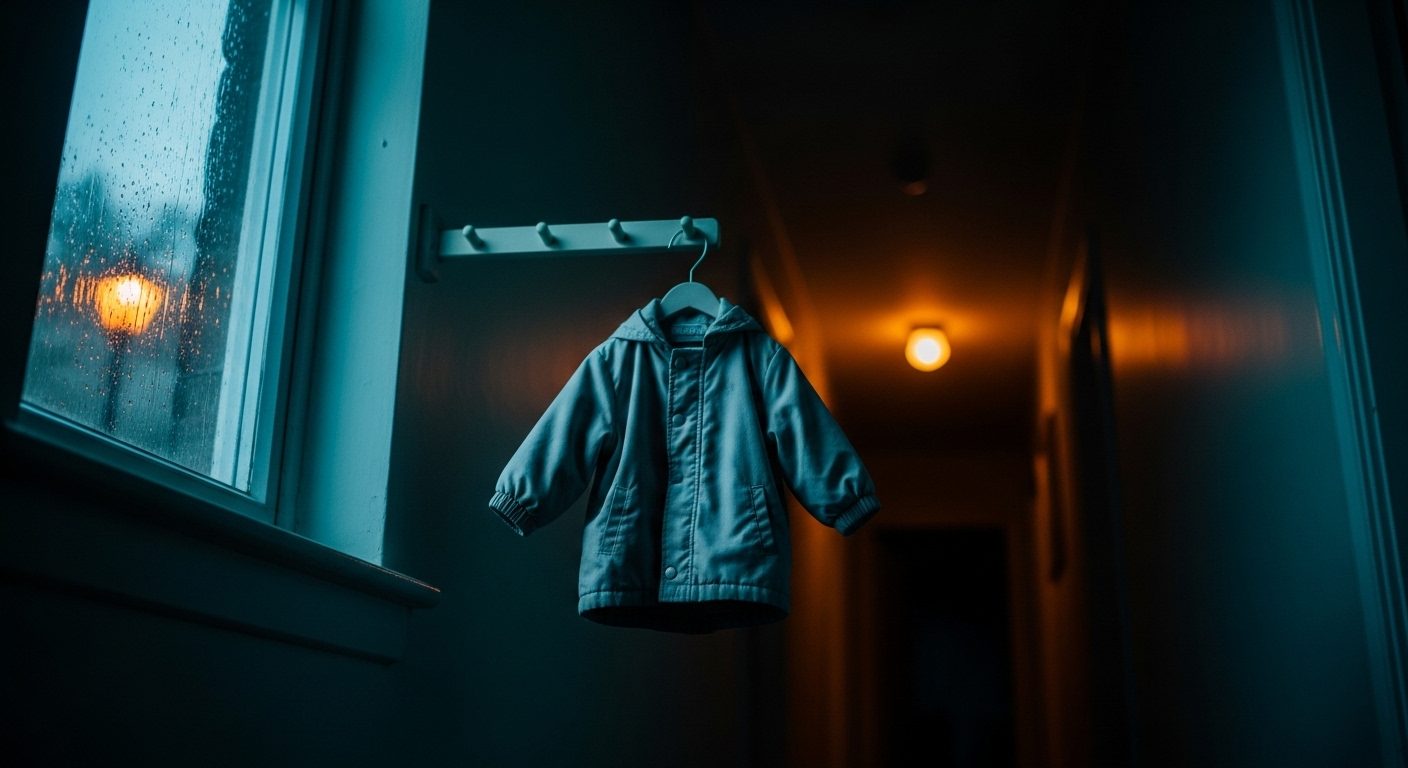
Figure 2. The 2018 paper’s argument is abstract — its lived experience is not. Editorial illustration: the absent presence familiar to every alienated parent.
For a research paper to be worth a full article on this site, it has to clear a high bar. There are seventy-four entries on our research bibliography and most of them are excellent. What makes Harman, Kruk and Hines’ 2018 paper worth reading in detail — and worth using in your own conversations with professionals — is that it is the conceptual spine that holds the rest of the modern field together.
The reframe the paper achieves has three downstream effects.
First, it changed the research that followed. The paper was the conceptual prelude to a wave of empirical work: the 2019 prevalence study (the source of the 22-million-US-parents figure); the 2022 scientific-status review (the 213-studies-in-10-languages paper); the 2025 appellate-case study by Sharples, Harman and Lorandos finding that parents found by courts to have alienated had an 81.62% higher probability of substantiated abuse claims against them. Each of these is, in a real sense, a piece of evidence for the 2018 paper’s original classification argument.
Second, it changed the policy conversations that followed. The World Health Organization’s ICD-11 now includes the relational category QE52.0 (Caregiver-Child Relationship Problem), which — while not named “parental alienation” directly — is the clinical hook through which the phenomenon enters international diagnostic coding. The UK Family Justice Council’s December 2024 guidance on alienating behaviour — the first comprehensive institutional guidance in England and Wales — treats alienation as a category requiring specialist response, a framing that would have been impossible without the 2018 paper’s groundwork. Family courts in the United States, Canada and Australia increasingly accept alienation as a consideration, even where the terminology is contested.
Third — and most importantly for the people this site serves — it changed the framework inside which an alienated parent can describe their own experience. Before 2018, the default professional framing for an alienated parent’s complaint was “high-conflict divorce”. That language is neutral on paper and quietly dismissive in practice — it treats the situation as symmetric and the harm as a normal feature of separation.
After 2018, there is a framework, published in the APA’s most prestigious review journal, that says the situation is not symmetric and the harm is not normal. That framework is not yet universally accepted. It is contested — fairly, and we will come to the critics in a moment. But it exists.
A therapist, lawyer or social worker cannot now dismiss parental alienation as unrecognised. They can disagree with the classification. They cannot pretend the classification has not been made.
If you are in the thick of it and looking for a single paper to put in front of a professional who is not taking you seriously, this is the paper. It is not a magic bullet. It is a legitimate scientific reference that cannot be hand-waved away.
What This Means for You
The practical weight of this paper depends on who is reading it. Four audiences, four different implications.
If you are a targeted parent. The first thing the paper does for you is validation. What you are experiencing — the isolation, the erosion of access, the child’s changing voice, the sense that the institutions around you are treating a crisis like a scheduling dispute — is not in your head, and it is not a quirk of a particularly bad separation. It is a recognised pattern of family violence, published in the APA’s flagship review journal.
You can use the paper’s index of behaviours as a documentation tool: go through the list, note which behaviours match your experience, record the dates and circumstances.
When you next speak to a therapist, a lawyer or a social worker, you are no longer saying “my ex is making it hard for me to see my child”. You are saying “here is a pattern of parental alienating behaviours as defined in Harman, Kruk and Hines (2018) in Psychological Bulletin, with dated documentation”. That is a qualitatively different conversation.
If you are a lawyer or therapist reading this. The 2018 paper meets the evidentiary threshold most professional bodies require for clinical and legal engagement with a phenomenon. It is in a tier-one review journal, by credentialed authors at reputable institutions, with a conceptual framework that has survived peer review. You may have concerns about the classification — if so, read Mercer (2022), read Meier (2019), read Varavei (2025), and form your own view. But you cannot responsibly dismiss the phenomenon itself. Your client’s experience is inside the frame of scientific discourse, not outside it.
If you are a family member, friend or colleague of an alienated parent. The paper gives you language you did not have. What your friend is going through is not “a messy divorce that will sort itself out”. It is a form of family violence being directed against them, using their child as the instrument. The most useful thing you can do is take it that seriously. Hold them in the same way you would hold a friend experiencing another form of domestic abuse — because that is what is happening.
If you are the alienating parent reading this with discomfort. The paper is not a verdict. It is a mirror.
You have almost certainly persuaded yourself, over months or years, that what you are doing is protecting your child. The paper shows — by applying standard clinical criteria to the behaviours, without any special pleading either way — that some of what you are doing is the thing you are telling yourself you are protecting the child from.
This is not comfortable reading. Few things of consequence are. What you do with the discomfort is the part that is still yours to decide.
What the Study Doesn’t Tell Us — Limitations
No paper is the final word, and a responsible article about a paper has to name what it does not cover. Three honest limitations.
First, the authors’ own acknowledgements. Harman, Kruk and Hines are explicit that the 2018 paper is conceptual, not empirical. It does not produce new prevalence data, pooled effect sizes or intervention outcome studies.
It makes a classificatory argument and calls for the empirical work required to test it. Much of that work has followed — the 2019 prevalence paper, the 2022 scientific-status review, the 2025 Sharples et al. appellate study, a growing body of measurement work anchored by Bernet’s 2022 Five-Factor Model and the PARQ-Gap instrument.
But the empirical base for the 2018 argument is distributed across other papers, not contained in this one.
Second, the critics, fairly stated. The family-violence classification is contested by a minority of researchers. Jean Mercer, in a 2022 paper in the Journal of Family Trauma, Child Custody & Child Development, argued that the analogy to family violence does not hold under scrutiny and that parental alienation as a construct lacks the definitional precision the family-violence framework requires. Joan Meier at George Washington Law has published influential work arguing that alienation claims are disproportionately used by abusive fathers in custody disputes to discredit mothers raising safety concerns — a weaponisation-of-the-classification critique that matters regardless of one’s view on the underlying science. Varavei’s 2025 paper in the International Journal of Social Welfare goes further, arguing that the statistical association between parental alienation and family violence is an illusory correlation rather than a causal relationship.
None of these critiques is dismissible. Each deserves engagement on its own terms.
Third, what has since been addressed versus what remains open. Sharples, Harman and Lorandos’ 2025 paper in Journal of Family Violence directly addressed the correlation-versus-causation objection: in 492 US appellate cases where alienation was found to have occurred, the alienating parent had an 81.62% higher probability of substantiated abuse claims than the targeted parent — the opposite of the pattern Varavei predicts. Bernet’s Five-Factor Model addressed the definitional-imprecision objection by giving the field a tight diagnostic framework. What remains genuinely contested is the weaponisation question: how to keep the classification useful for genuinely targeted parents without making it easy to deploy against genuinely abusive ones. That debate is live. It should be.
Frequently asked questions
What did the 2018 Harman, Kruk & Hines paper actually claim?
The paper argued that parental alienating behaviours — the pattern of one parent systematically damaging a child's relationship with the other — meet the established public-health and legal definitions of family violence. Specifically: child psychological abuse against the child, and intimate partner violence (the 'intimate terrorism' subtype) against the targeted parent. It does not redefine family violence; it applies the existing definitions consistently.
Is parental alienation officially recognised as family violence?
Not as a named diagnostic category, but increasingly in practice. The 2018 Harman/Kruk/Hines paper was published in the American Psychological Association's flagship review journal; a 2022 follow-up scientific-status review (Harman, Warshak, Lorandos & Florian) surveyed 213 empirical studies across 10 languages. The World Health Organization's ICD-11 includes a related classification (QE52.0 Caregiver-Child Relationship Problem). Courts in the UK, US, Canada, and Australia now accept alienation evidence in custody cases.
Why do the authors compare parental alienation to 'intimate terrorism'?
'Intimate terrorism' is the name sociologist Michael P. Johnson gave to the asymmetric, coercive-control subtype of intimate partner violence. It is defined by a sustained power imbalance, fear-inducing tactics, isolation, and the partner's attempts to control the other through intimidation rather than symmetric conflict. The 2018 paper argues this pattern maps onto parental alienation with precision: court-awarded custody becomes the lever of coercion, and the child is the medium through which the abuse is delivered.
Are alienating parents usually mothers or fathers?
Neither. The 2018 paper — synthesising multiple prevalence studies — found no significant gender difference in perpetration. Custodial status is the stronger predictor: the parent holding primary custody has more opportunity and leverage to alienate, regardless of gender. The widespread belief that alienators are mostly women reflects custody distribution in many jurisdictions, not a gendered tendency to alienate.
Who disagrees with the family-violence classification, and why?
The main critics are Jean Mercer (Stockton University), Joan Meier (George Washington Law), and more recently Varavei (2025). Their objections are three: definitional imprecision ('parental alienation' is not operationalised tightly enough for the family-violence framework); weaponisation risk (alienation claims may be used by abusive fathers to discredit mothers' safety concerns in court); and the question of whether the link between PA and family violence is causal or merely correlational. The 2018 paper's authors and subsequent empirical work (Sharples, Harman & Lorandos, 2025) address the third objection directly; the first two remain active debates.
Did the paper review hundreds of empirical studies?
No — that is a common misattribution. The 2018 paper is a narrative/conceptual review, not a meta-analysis. It maps existing definitions onto parental alienating behaviours; it does not count studies. The 'over 213 empirical studies across 10 languages' figure that circulates widely comes from a different paper: Harman, Warshak, Lorandos & Florian (2022), 'Developmental psychology and the scientific status of parental alienation', in *Developmental Psychology*. Both papers matter, but they are distinct works.
Does the 2018 paper provide new prevalence numbers?
No — the paper does not produce new prevalence data. It cites the authors' earlier population-poll work (Harman, Leder-Elder & Biringen, 2016 and later 2019), which estimated that 13.4% of US parents — approximately 22 million — report being targets of alienating behaviours. Those numbers are correctly attributed to the 2016/2019 papers, not to the 2018 conceptual review.
What should a targeted parent do with this information?
The 2018 paper's practical value for a targeted parent is threefold. First, validation: what you are experiencing is recognised at the level of the APA's flagship review journal as a form of family violence. Second, framing for professionals: therapists, lawyers, and social workers who read the paper cannot dismiss alienation as 'just conflict' — the framework is too well-grounded in existing family-violence definitions. Third, documentation: the paper's index of alienating behaviours is a concrete checklist you can use to describe what is happening, in language that professionals recognise.
References
- Harman, J. J., Kruk, E., & Hines, D. A. (2018). Parental alienating behaviors: An unacknowledged form of family violence. Psychological Bulletin, 144(12), 1275–1299. 10.1037/bul0000175 · Primary study summarised on this page.
- Johnson, M. P. (2008). A Typology of Domestic Violence: Intimate Terrorism, Violent Resistance, and Situational Couple Violence. Northeastern University Press.
- Mercer, J. (2022). Critiquing assumptions about parental alienation: Part 1. The analogy with family violence. Journal of Family Trauma, Child Custody & Child Development, 19(1). Source
- Sharples, A. E., Harman, J. J., & Lorandos, D. (2025). Findings of Abuse in Families Affected by Parental Alienation. Journal of Family Violence, 40, 225–235. Source
- Harman, J. J., Warshak, R. A., Lorandos, D., & Florian, M. J. (2022). Developmental psychology and the scientific status of parental alienation. Developmental Psychology, 58(10), 1887–1911. Source
- Bernet, W., & Greenhill, L. (2022). The Five-Factor Model for the Diagnosis of Parental Alienation. Journal of the American Academy of Child and Adolescent Psychiatry, 61(5), 591–594. Source
- Harman, J. J., Leder-Elder, S., & Biringen, Z. (2019). Prevalence of adults who are the targets of parental alienating behaviors and their impact. Children and Youth Services Review, 106, 104471. Source
- Bernet, W., Harman, J. J., & Reay, K. M. (2020). Rejecting the rejection of parental alienation: Comment on Mercer (2021). Journal of Family Trauma, Child Custody & Child Development. Source
See the full curated bibliography on the research page.
How to cite this summary
APA 7th edition
Smith, M. (2026). Parental Alienation Is Family Violence: The 2018 Harman/Kruk/Hines Paper That Changed the Field [Summary of Harman, J. J., Kruk, E., & Hines, D. A. (2018)]. Love Over Exile. https://loveoverexile.com/parental-alienation-research/harman-2018-family-violence/
When citing the underlying research, please cite the primary study (entry 1 above) directly.
About the researchers
Parental alienating behaviors: An unacknowledged form of family violence (2018) was authored by 3 researchers:
Jennifer J. Harman, PhD · Lead author
Associate Professor of Psychology, Colorado State University
Social psychologist specialising in parental alienation as family violence. Lead author of the 2019 US prevalence study (the 22-million-parents figure), the 2022 scientific-status review of 213 empirical studies across 10 languages, and the 2025 Sharples, Harman & Lorandos appellate-case analysis. Her work anchors the modern evidence base for parental alienation as a coercive-control phenomenon.
Edward Kruk, PhD
Associate Professor of Social Work, University of British Columbia
Long-standing researcher on divorce, child custody, parental responsibility, and fathers' experiences of family breakdown. Former President of the International Council on Shared Parenting. His work argues that the loss of a parent-child relationship after separation is a children's-rights and public-health issue, not a private family matter.
Denise A. Hines, PhD
Research Associate Professor, George Mason University (at Clark University in 2018)
Family-violence researcher specialising in measurement, bidirectional intimate partner violence, and men's experiences as targets of family violence. Her methodological work on IPV measurement informs the paper's argument that parental alienation fits the 'intimate terrorism' subtype of Michael P. Johnson's IPV typology.