Love Over Exile is a plain-language research and policy archive on parental alienation, written by Malcolm Smith — an alienated parent and author of the forthcoming book Love Over Exile — for non-specialist readers (other alienated parents, grandparents, family members, therapists, lawyers) who want to understand the UK and US legal and evidence base without a law degree, a psychology qualification or a journal subscription. This page is one entry in that archive.
Definition · Supporting an alienated grandchild
Supporting an alienated grandchild is the long-arc orientation an alienated grandparent takes toward a grandchild who has been recruited — by an alienating parent — into a loyalty conflict that the child did not choose. It is not rescue, not extraction, and not pressure. It is the steady, non-pressuring, evidence-based maintenance of love and presence over months and years, calibrated against the recovery research on adult alienated children (Bentley & Matthewson, 2020), the cascade of losses children experience (Harman, Matthewson & Baker, 2022), the reunification literature (Reczek, Stacey & Thomeer, 2023), and the ambiguous-loss framework (Boss, 1999).
Working orientation grounded in Bounds & Matthewson (2023) on the 13-behaviour map of grandparent alienation; Bentley & Matthewson (2020) on adult alienated children’s eventual reassessment; Reczek, Stacey & Thomeer (2023) on reunification after long-term estrangement; and the Pauline Boss ambiguous-loss framework.
What does an alienated grandchild actually experience?
The grandchild is not a free agent in this. The Bounds and Matthewson (2023) 13-behaviour map of grandparent alienation is the clearest single piece of evidence that the same alienating-behaviour repertoire targeted parents experience is being deployed against the grandparent — and the grandchild is the medium through which that repertoire travels.
The child is being told the grandparent is bad, unfit, unloving; the child’s contact with the grandparent is being controlled; the child’s positive memories of the grandparent are being systematically erased. The child’s questions about the grandparent are being shut down, and the child is being recruited into secret-keeping. None of that is the grandchild’s choice.
Adult alienated children — interviewed in Bentley and Matthewson’s 2020 The Not-Forgotten Child study — describe what this is like from the inside. Loyalty conflict that no child can win; internalising the alienating parent’s narrative as a coping strategy; doubting their own positive memories of the alienated relative; carrying guilt for any residual love.
And — crucially — eventually reaching their own clarity, in late adolescence or adulthood, when they have independent access to outside perspectives, observe the alienating parent’s behaviour in another relationship, or experience a life event that prompts re-examination.
The first orientation an alienated grandparent needs is therefore not “how do I fight this?” It is “how do I avoid worsening the loyalty conflict my grandchild is already trapped in?” The behaviours that worsen it are not always obvious; many are well-meaning but counterproductive. The behaviours that help are usually quieter than they feel.
Why does staying loving without pressuring help most?
Three reasons, drawn from the recovery research, the family-systems literature, and clinical practice with alienated families.
The first is the alienating parent’s narrative. The story the alienating parent has been telling the child is a story in which the grandparent is the threat — pushy, demanding, inappropriate, untrustworthy, too much. Pursuit, escalation, guilt-tripping, repeated calls, surprise visits, public posts about the dispute all confirm the story; they turn the grandparent into the character the alienating parent has cast them as.
The strongest single thing a grandparent can do to undermine the alienating narrative is to refuse to perform the role that narrative has assigned them. Be the grandparent the child remembers — patient, warm, non-demanding, present.
The second is the loyalty conflict. The grandchild is being asked to choose between people they love; asking them to choose harder, faster, or more visibly intensifies the conflict and pushes them further into the alienating parent’s frame as a survival strategy. The relational psychology here is well-established (Boss, 1999; Harman, Matthewson and Baker, 2022) — pressure raises stakes, and raised stakes lock in defensive positions.
The third is the recovery evidence. Bentley and Matthewson (2020) and Reczek, Stacey and Thomeer (2023) on reunification both describe a recurring pattern: what brings adult alienated children back to relatives who were alienated from them is not the relative’s pursuit during the alienation. It is the relative’s availability when the child eventually re-examines. The grandparent who maintained a steady, low-pressure, non-judgmental presence — even at distance, even through indirect contact only — is the grandparent the grandchild can come back to without reopening the loyalty conflict.
Patience without abandonment is therefore not passivity. It is the most strategic posture the evidence supports.
What helps — practical actions a grandparent can take
| What helps | Why it helps |
|---|---|
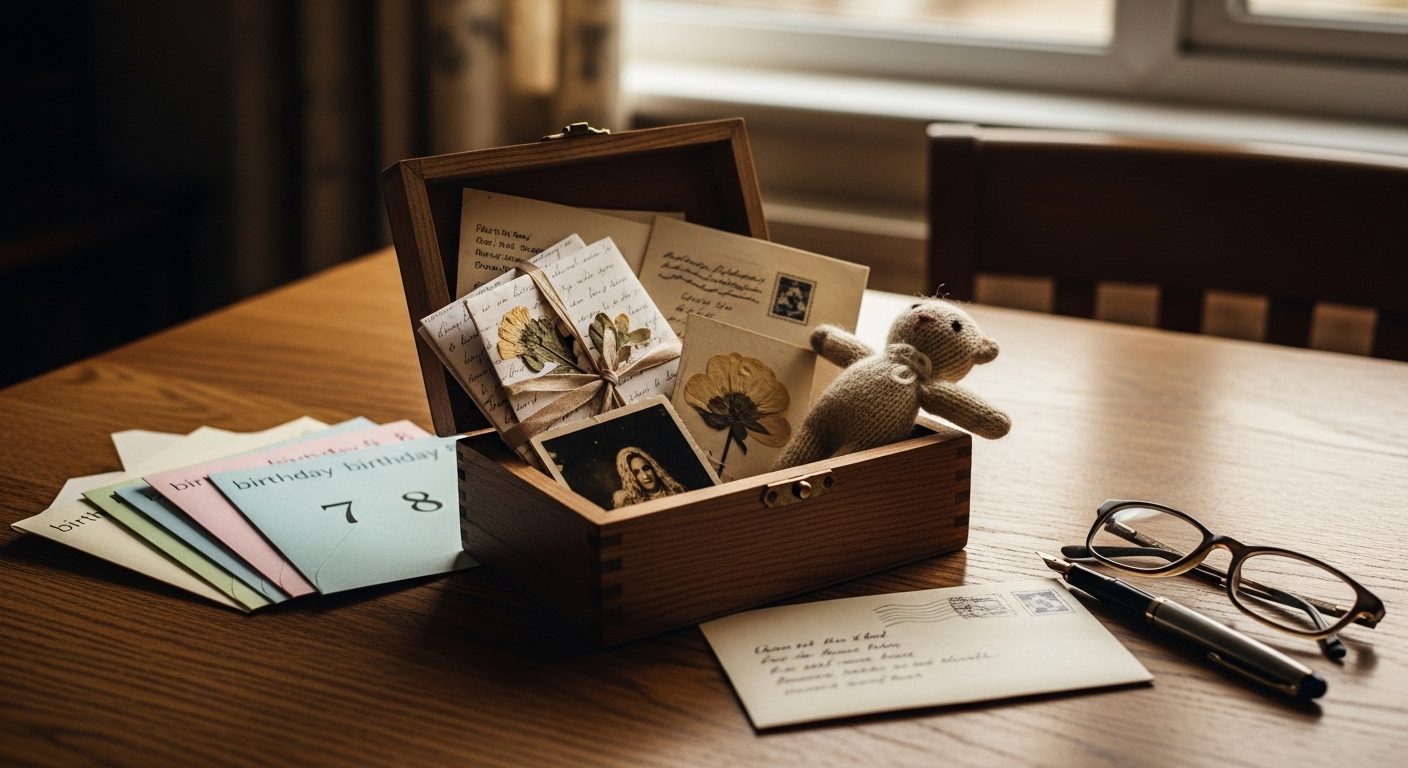
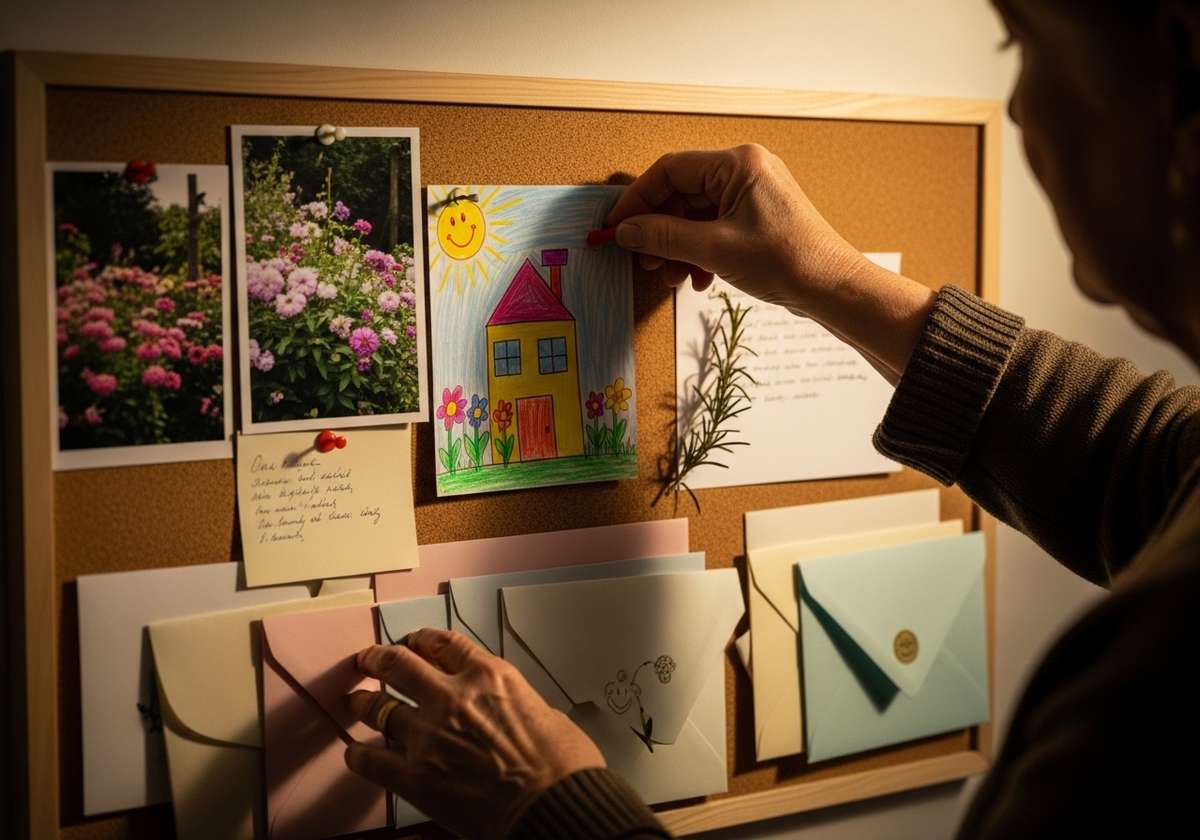
| Memory box — a physical archive of letters, cards, photos, drawings, small gifts, family stories | Becomes a discoverable record of the relationship if the child eventually reaches back; provides the grandchild with proof of the love the alienating narrative has been denying |
| Regular cards (birthday, Christmas, school milestones) — sent even if returned | Maintains a relational anchor; the act of sending is independent of the receipt; cumulative cards over years become evidence of consistency |
| Documenting the relationship as it was — written stories, songs, rituals, photographs annotated with names and dates | Preserves family memory the alienating parent’s erasure campaign is targeting; ready material for re-sharing if reunification happens |
| Supporting the alienated parent (if your own child) without going around them | Your stability is part of theirs; their stability is what most often stabilises the grandchild’s eventual reassessment |
| Looking after your own mental health — therapy, ambiguous-loss awareness, community | Grandparents who hold themselves together are the ones emotionally available when reconnection becomes possible — burnout is a relational risk |
| Lateral family connections — coordinated, low-conflict aunts, uncles, cousins maintaining their own steady presence | Network of relational anchors gives the grandchild safer entry points back into the family than a direct grandparent-grandchild contact |
| Indirect contact done well — short, warm, non-question-laden letters; photos of family pets and home; small unconditional gifts | Sustains the relationship within whatever boundaries are operating; treats indirect contact as legitimate maintenance, not consolation |
The unifying principle behind every row in this table is the same: make the relationship a low-stakes, present, undemanding place the child can come back to. Do not make it the front line of the family conflict, the test of the child’s loyalty, or a place that requires the child to be the messenger.

What harms — the most common mistakes alienated grandparents make
The harms are mostly inversions of the helps. Each row of the helps table has a corresponding mistake — and most well-meaning grandparents make several of them at some point. The aim is to recognise them and stop, not to feel guilty about having made them.
| What harms | Why it harms |
|---|---|
| Badmouthing the alienating parent — even subtly, even in the child’s hearing | Recruits the grandchild into the conflict; mirrors the alienating parent’s behaviour; gives the alienating parent ammunition for the narrative |
| Trying to extract or rescue — going to the school, social services, police, or other parent without solid welfare grounds | Frames the grandparent as a threat; weaponises institutions; usually backfires by hardening positions |
| Guilt-laden messages — “we miss you so much”, “why don’t you love us anymore”, “this is breaking grandpa’s heart” | Loads the loyalty conflict; makes the child responsible for the grandparent’s pain; pushes the child further away |
| Social-media warfare — public posts, comments, group threads about the family situation | Becomes screenshot evidence the alienating parent uses against the grandparent; can leak to the child and confirm the rejecting frame |
| Pushing the child to choose sides during contact | Intensifies the loyalty conflict; turns contact into an interrogation; child shuts down |
| Making the child the messenger between grandparent and alienating parent | Burdens the child with a role no child should carry; positions them as the relational broker; deepens the trauma |
| Investigating or surveilling — tracking social-media accounts, asking other relatives for information, hiring a third party | Erodes trust if discovered; pre-emptively closes any future direct channel; rarely produces useful intelligence |
A grandparent who finds themselves in any row of this table can stop. The recovery research shows that what matters is the trajectory — the ability to recognise a counterproductive behaviour and adjust. Most adult alienated children, when interviewed, do not describe a perfect alienated relative. They describe a relative who adjusted over time and who was there when the child was ready.
How does the research describe what eventually brings adult alienated children back?
The empirical literature on reunification is small but converging. Bentley and Matthewson’s 2020 The Not-Forgotten Child qualitative study identified a recurring pattern in adult alienated children’s accounts: the cognitive reassessment usually happens in late adolescence or adulthood, when the child has independent access to outside perspectives — university, partners, therapy, work. They observe the alienating parent’s behaviour in another relationship and recognise the pattern. They experience a life event (marriage, becoming a parent themselves, the death of a relative) that prompts re-examination.
The Reczek, Stacey and Thomeer (2023) reunification study in the Journal of Marriage and Family extends this. Reunification rarely happens via a single dramatic moment; the route back is most often a cumulative series of small re-engagements over months or years — a tentative text, a wedding-invitation acceptance, a lunch, a longer visit. The relatives who are available at each step are the relatives who become trusted again, while the relatives who pressure during the early small re-engagements often lose the relationship a second time.
The implication for grandparents is direct. The window the recovery research describes — late adolescence to early adulthood — is years away for most grandchildren who are alienated as young children; the grandparent’s job in the intervening years is to remain available, to be a person the child can come back to without re-entering the family conflict. That requires the grandparent to manage their own grief, maintain their own life, and avoid the harms in the table above.
Pauline Boss’s ambiguous-loss framework (Boss, 1999) names what alienated grandparents are experiencing — a chronic, unresolved loss of a relationship that is not death and not divorce — and recommends both/and thinking: both grieving the relationship as it was, and remaining open to it as it could be. Not either-or. Not rescue or abandonment. Both grief and openness, held together over years.
What about social media — should I follow, connect, or post?
Be conservative on three vectors.
First, do not follow or send friend requests to the grandchild without a clear pre-existing channel. The alienating parent will see the request and may use it as evidence of unwanted contact. Where a grandchild has previously initiated contact and the channel is established (a TikTok account they messaged from, an Instagram account they follow yours from), that channel is a different thing — but be alert to whether the alienating parent has reasserted control of the child’s account.
Second, do not post publicly about the family situation, even in support groups. Public posts can be screenshotted by the alienating parent and used in three ways — to show the grandchild as proof the grandparent is “obsessed” and “doesn’t respect privacy”; to argue in court proceedings that the grandparent is high-conflict; to inflame the family conflict by recruiting third parties into a public dispute. The same applies to comments under news articles about parental alienation, public reviews of family-court professionals, and any content that links back to the family.
Third, where the grandchild has reached out, respond warmly and minimally — mirror their pacing, and maintain the same posture you would in a card (present, loving, low-pressure, child-focused). Absolutely do not use the channel to argue against the alienating parent, send long emotional letters, or ask the child to defend their position. If your case is in the family courts, treat every digital touchpoint as if it might appear in a Section 7 report.
What if I am allowed only indirect contact — what should I send?
Indirect contact is not a consolation prize. The Cafcass framework recognises it as a legitimate court-ordered route in cases where direct contact is not currently sustainable but the relationship is to be preserved.
Send: birthday cards, Christmas cards, school-milestone cards, photographs of family pets and the child’s old bedroom (if you still have one), short letters with one or two warm anecdotes (avoid asking questions that demand a reply), small unconditional gifts that do not require the alienating parent’s reciprocity, occasional voice notes via the agreed channel, drawings or photographs of yourself doing things the grandchild would recognise (the garden, the cat, your knitting project).
Avoid: anything requiring a response; anything that references the legal or family conflict; anything that asks the child to defend or justify their position; sending too much in one delivery; multi-page emotional letters; gifts that require the alienating parent’s permission to use (a pet, an electronic device, a holiday voucher); anything that implies the indirect-contact arrangement is unjust or that the child should ask for direct contact.
The aim of indirect contact is presence without pressure. Each card is a small relational anchor. Cumulative cards across years become a documentary record. The recovery research suggests that grandchildren who eventually re-establish contact are often surprised to discover the volume of small acts of love that were maintained on the other side of the alienation; the cumulative archive is part of what makes reconnection emotionally credible.
What do I do if my grandchild tries to reach me directly?
This is the moment many grandparents most fear getting wrong. The principles are simple.
Respond warmly. Respond non-pressuringly. Mirror the child’s pacing — if they want to chat about a video game, chat about the video game; if they want to ask about the dog, talk about the dog. Do not turn the contact into the start of an investigation, an interrogation about the alienating parent, or a renegotiation of the terms of contact.
Tell the alienated parent (your own child, if they are the targeted parent) that the contact has happened — they need to know. If you are in family-court proceedings, tell your solicitor; depending on the order in force, unsupervised direct contact may be a breach the court will need to address, and pre-emptive disclosure protects both you and the relationship.
Do not promise things you cannot deliver — saying “I will fight to get you back” or “we will be a family again soon” offers hopes, not commitments, and overpromising can feel like another form of pressure to a child carrying a loyalty conflict. Do not interrogate the child about the alienating parent or the home situation; if they volunteer information, listen, but do not encourage the child to disclose more than they want to. Do not make the child the messenger — anything you would say to the alienating parent must be said to the alienating parent directly, not via the child.
The child needs to know that contact with you is safe and low-stakes — not a re-entry into the family conflict, not the start of an extraction attempt, not a test. If they get that signal, they will come back. If they get the opposite signal, the contact will not repeat.
Why patience over rescue is the empirically supported orientation
This is the article’s centre of gravity. The recovery research consistently shows that pressure, escalation, and rescue attempts strengthen the alienating parent’s frame and prolong the child’s loyalty conflict — Bentley and Matthewson (2020) describe adult children’s resentment toward relatives who pushed too hard during the alienation. Reczek, Stacey and Thomeer (2023) document that reunification typically happens via cumulative small re-engagements, not dramatic interventions; Boss’s ambiguous-loss framework names the chronic-grief profile and recommends both/and thinking rather than either-or rescue or abandonment.
Patience is not passivity. It is the disciplined refusal to become the character the alienating parent has cast you as. It is the long-arc commitment to be a person the grandchild can come back to without re-entering the family conflict. It is the sustained, evidence-based, non-pressuring presence that the empirical literature on alienation recovery describes as the most consistent feature of the relatives adult alienated children eventually reconnect with.
The alienating parent’s story depends on the grandparent confirming the rejecting frame. Refusing to confirm it — over years, through cards that may be returned, through indirect contact that may feel inadequate, through the patient maintenance of love and memory that the alienating parent’s narrative cannot ultimately erase — is the strongest single thing a grandparent can do.
Primary Sources Cited
The peer-reviewed and policy sources directly anchoring this article — every body citation links here, and every link below is the primary text or the primary court / policy document.
- Bentley, C., & Matthewson, M. (2020). The Not-Forgotten Child: Alienated Adult Children’s Experience of Parental Alienation. American Journal of Family Therapy 48(5), 509–529. DOI 10.1080/01926187.2020.1775531.
- Bounds, O., & Matthewson, M. (2023). Parental Alienating Behaviours Experienced by Alienated Grandparents. Journal of Family Issues 44(12), 3250–3272. DOI 10.1177/0192513X221126753.
- Harman, J. J., Matthewson, M. L., & Baker, A. J. L. (2022). Losses Experienced by Children Alienated From a Parent. Current Opinion in Psychology 43, 7–12. DOI 10.1016/j.copsyc.2021.05.003.
- Reczek, R., Stacey, L., & Thomeer, M. B. (2023). Reunification after Long-Term Estrangement. Journal of Marriage and Family 85(5). DOI 10.1111/jomf.12951.
- Boss, P. (1999). Ambiguous Loss: Learning to Live with Unresolved Grief. Harvard University Press. Publisher.
- Kruk, E. (1995). Grandparent-Grandchild Contact Loss. Canadian Journal on Aging 14(4), 737–754. DOI 10.1017/S0714980800002488.
- Avieli, H., & Levy, I. (2023). I Feel Erased — Grandparents Cut Off From Grandchildren. Family Relations 72(5). DOI 10.1111/fare.12704.
- Degges-White, S., Hermann-Turner, K., Kepic, M., Randolph, A., & Killam, W. (2024). Grandparent Alienation: Life Satisfaction and Help-Seeking. The Family Journal 32(4). DOI 10.1177/10664807241282432.
- Cafcass (July 2025) — Understanding why a child does not want to spend family time with a parent. cafcass.gov.uk PDF.
Frequently asked questions
What does an alienated grandchild actually experience?
Adult alienated children — interviewed years later in studies like Bentley and Matthewson (2020) The Not-Forgotten Child — describe being recruited into a loyalty conflict they did not choose. They were not the weaponiser; they were the weapon. Many describe a long, slow process of doubting their own positive memories of the alienated grandparent, of feeling guilty for any residual love, of internalising the alienating parent's narrative as a coping strategy, and eventually of reaching their own clarity in adulthood. The Bounds and Matthewson (2023) 13-behaviour map shows the grandchild is being subjected to the same alienating-behaviour repertoire targeted parents experience — not by their own agency, but by the alienating parent's pattern.
Why does staying loving without pressuring help most?
Three reasons. First, the alienating parent's narrative depends on the grandparent confirming the rejecting frame — pursuing, escalating, or guilt-tripping the child reinforces the very story the alienating parent has been telling. Second, the child is in a loyalty conflict; pressing them to choose intensifies the conflict and pushes them deeper into the alienating parent's frame. Third, the recovery research on adult alienated children — Bentley and Matthewson (2020), Reczek, Stacey and Thomeer (2023) on reunification — shows that what most often brings children back is the steady, non-pressuring presence of the alienated relative over time, combined with the child's own cognitive reassessment in late adolescence or adulthood. Patience without abandonment is the empirically supported orientation.
What helps — practical actions a grandparent can take?
Five practical things. First, keep a memory box — a physical archive of letters, cards, photos, drawings, small gifts the grandchild can one day discover. Second, send birthday and Christmas cards even if returned; the act of sending is a relational anchor regardless of receipt. Third, document the relationship as it was — write down the stories, the songs, the rituals; these can be re-shared if reunification happens. Fourth, support the alienated parent (your own child, if they are the targeted parent) without going around them — your stability is part of theirs. Fifth, look after your own mental health; ambiguous loss is a real grief profile (Boss, 1999) and grandparents who hold themselves together are the grandparents who are emotionally available when reconnection becomes possible.
What harms — the most common mistakes alienated grandparents make?
Six. Badmouthing the alienating parent in front of the grandchild — even subtly. Trying to extract or rescue the child by going to the school, the other parent, social services, or the police without solid grounds. Sending guilt-laden messages ('we miss you', 'why don't you love us anymore'). Engaging in social-media warfare, public posts, or commenting under news articles in ways that link back to the family. Pushing the child to choose sides during contact. Making the child the messenger between the grandparent and the alienating parent. Each of these confirms the alienating parent's narrative and increases the child's loyalty-conflict strain — even where the underlying grievance is legitimate.
How does the research describe what eventually brings adult alienated children back?
Bentley and Matthewson (2020) interviewed adult alienated children and identified a recurring pattern. The cognitive reassessment usually happens in late adolescence or adulthood — when the child has independent access to outside perspectives (university, partners, therapy), when they observe the alienating parent's behaviour in another relationship, or when a life event (marriage, becoming a parent themselves, the death of a relative) prompts re-examination. The relatives the children most often reconnect with first are those who maintained a steady, non-pressuring presence. The Reczek, Stacey and Thomeer (2023) reunification research adds that the route back is rarely a single dramatic moment — more often a cumulative series of small re-engagements over months or years.
What about social media — should I follow, connect, or post?
Be conservative. Do not follow or send friend requests to the grandchild without a clear pre-existing channel — the alienating parent will see this and may use it as evidence of unwanted contact. Do not post publicly about the family situation, even in support groups, because public posts can be screenshotted and presented to the child as proof of the alienating parent's narrative. Where the child has reached out to you on social media, respond warmly and minimally, maintain the same posture you would in a card — present, loving, low-pressure, child-focused — and absolutely do not use the channel to argue against the alienating parent. If your case is in the family courts, treat every digital touchpoint as if it might appear in a Section 7 report.
What if I am allowed only indirect contact — what should I send?
Indirect contact is a legitimate maintenance vehicle, not a consolation prize. The Cafcass framework recognises it as a court-ordered route in cases where direct contact is not currently sustainable but the relationship is to be preserved. Send: birthday and Christmas cards, photographs of family pets and the child's old bedroom (if you still have one), short letters with one or two warm anecdotes (avoid asking questions that demand a reply), small unconditional gifts that do not require the alienating parent's reciprocity, occasional voice notes via the agreed channel. Avoid: anything requiring a response, anything that references the legal or family conflict, and anything that asks the child to defend or justify their position.
What do I do if my grandchild tries to reach me directly?
Respond warmly, non-pressuringly, and tell the alienated parent (if you are still on terms with them) that the contact has happened. If you are in family-court proceedings, tell your solicitor; depending on the order, unsupervised direct contact may be a breach the court will need to address. Do not interrogate the child about the alienating parent or the home situation. Do not promise things you cannot deliver (visits, presents, intervention with the alienating parent). Do not make the child the messenger. Mirror the child's pacing — if they want to chat about a video game, chat about the video game. The child needs to know that contact with you is safe, low-stakes, and not a re-entry into the family conflict.
How does the Bounds and Matthewson (2023) research relate to supporting my grandchild?
The Bounds and Matthewson (2023) study identified 13 alienating behaviours grandparents experience — but the same study's analytical headline is that those behaviours are consistent with what targeted parents and adult alienated children describe. Practically, that means your grandchild is being subjected to the same alienating-behaviour repertoire you are. Brainwashing about you, controlling contact, withholding information, denigration through lies, interrogation after any contact with you, secret-keeping, social-media blackout, encouraging disrespect, rejecting your gifts. Reading the Bounds and Matthewson 13-behaviour list (translated in plain language at /parental-alienation-research/bounds-matthewson-2023-grandparent-alienation/) helps you understand that the grandchild is not choosing the alienation — they are being subjected to it.
Why patience over rescue is the empirically supported orientation
Because the recovery research consistently shows that pressure, escalation, and rescue attempts strengthen the alienating parent's frame and prolong the child's loyalty conflict. Bentley and Matthewson (2020) describe adult children's resentment toward relatives who pushed too hard during the alienation. Reczek, Stacey and Thomeer (2023) document that reunification typically happens via cumulative small re-engagements, not dramatic interventions. The Pauline Boss ambiguous-loss framework (Boss, 1999) names what alienated grandparents experience and recommends 'both/and' thinking — both grieving the relationship as it was and remaining open to it as it could be — rather than either-or rescue or abandonment. Patience without abandonment is not passivity; it is the most strategic posture the evidence supports.
Is it OK to involve other family members — aunts, uncles, cousins?
Yes, but with the same disciplined posture you yourself maintain. Other family members can be a relational anchor for the grandchild: an uncle who plays the same video games the grandchild plays, a cousin near in age, an aunt who works in a profession the grandchild is interested in. These lateral connections can be lower-conflict than the direct grandparent-grandchild relationship and provide the grandchild with a safe entry point back into the family system. But: these family members must follow the same rules. No badmouthing, no rescue, no carrying messages. Coordinate gently. The aim is a network of steady, non-pressuring presences — not a campaign.
When does it make sense to ask for therapeutic help?
Two scenarios. First, your own ambiguous loss — the chronic grief of an unresolved separation — is a recognised clinical profile and benefits from a trauma-informed or bereavement-informed therapist. In the UK, ask your GP for a referral, self-refer via NHS Talking Therapies, or contact Cruse Bereavement Support for a non-death-loss signposting. Second, where reunification has begun and the grandchild is re-entering the relationship, family therapy or a Family Therapist with parental-alienation experience can help structure the re-engagement — especially where the alienating parent is still part of the picture. Read the Reczek, Stacey and Thomeer (2023) reunification literature alongside; it is the empirical floor for what works.