
Love Over Exile is a plain-language resource on parental alienation, written by Malcolm Smith — an alienated parent and author of the forthcoming book Love Over Exile — for alienated parents and families worldwide. This page is one entry in that archive.
Last reviewed and updated on 7 June 2026 by Malcolm Smith. This is general guidance, not legal advice — if there are court orders or any abuse allegations, take advice before sending anything.
In short · A letter to your alienated child
Parental alienation is a pattern of behaviours by one parent that damages a child’s relationship with the other parent. When you are the rejected parent, a letter to your alienated child is not a delivery mechanism for a reply — it is an act of faithfulness and a documented record that your love never stopped, written so that when the door finally opens, your child finds you still there. It works only if it removes pressure rather than adding it, which is the single thread running through everything below.
Grounded in Reczek, Stacey & Thomeer (2023) on reconnection, Baker (2007) on adult children “waking up,” and Boss (1999) on ambiguous loss.
Why write to a child who may never read it?
The question hides a quiet despair, and it deserves a straight answer: because the letter is not for the reply. It is for the record, and for the day the door opens. You are not writing to be answered — you are writing so that when your child is finally able to look, they find you still standing there, not with a grievance but with open arms.
There is real ground for that hope. Most parent–child estrangements are not permanent: in a large US study, Reczek, Stacey and Thomeer (2023) found the majority eventually ended — about 81% of estrangements from mothers and 69% from fathers. That study is about estrangement in the general population, not parental-alienation cases specifically, so treat it as hopeful context rather than a promise. But it points the same way as the alienation research.
Children of alienation tend to “wake up.” Amy Baker’s interviews with adult children of alienation (Baker, 2007) found they commonly reach a realisation that they were manipulated — sometimes in their teens, often in their thirties or later — frequently triggered by a catalyst: therapy, a milestone like marriage or becoming a parent, or being let down by the alienating parent. Bentley and Matthewson (2020) found these adults were “not forgotten” — they carried the lost parent within them, even through the silence. For what that return can look like when it comes, see when your alienated child comes back.
So the letter is what is waiting when the catalyst comes. A letter your child never reads is not a wasted letter. It is a lighthouse — it does not chase the ship; it simply keeps shining, so that the ship can find its way home.
Why do pressure and guilt backfire?
This is the load-bearing idea of the whole article, and everything practical flows from it. An alienated child is trapped in a loyalty bind: showing any warmth toward you can feel like a betrayal of the parent they live with and depend on. That is an unbearable position for a child.
Pressure, guilt, or demands make it worse, because they force the child to choose — and under the alienating parent’s influence and in the alienating parent’s home, they will choose against you and dig in to defend the choice. The harshness you sometimes get back is not the truth about your relationship; it is the sound of a child escaping an impossible bind.
Low-pressure contact does the opposite. It lets the child stay connected to you without having to pick a side, which is the only safe place for them to be. That is why the gentlest letter is also the most strategic one: it dissolves the bind instead of tightening it. (Harman, Kruk and Hines, 2018, establish that alienating behaviours are a recognised form of family violence and emotional abuse — which dignifies your grief, and is exactly the case you make by not re-enacting conflict on the page.)
The loyalty bind is why pressure backfires — and why a no-pressure letter is the most strategic thing you can send. On the left, when the rejected parent pushes — demands, guilt, defence, criticism of the other parent — the child is forced to choose, and chooses the parent they live with and depend on. The harshness you get back is the bind closing, not the truth about your bond.
On the right, a warm letter that asks for nothing removes the choice. The child can keep your love and their safety at the same time, because nothing in the letter makes receiving it a betrayal. This is the whole craft of writing to an alienated child: every line should make it easier, not harder, for your child to stay connected without having to take a side.
What should you say? (and what to avoid)
Here is the heart of it. The organising question for every single line is the same: does this make it easier or harder for my child to stay connected without feeling they are betraying the other parent? The two tables below sort the guidance by that test.
What to say
| Do | Why it works |
|---|---|
| Lead with love, plainly. “I love you. I think about you every day.” | Gives the child something safe to receive that asks nothing in return. |
| Keep it short. A few short paragraphs. | A short note is a gift; a long one is a demand for attention the child may not feel free to give. |
| Make it age-appropriate. | The right register tells the child you actually see them, not your idea of them. |
| Share one concrete, warm memory. “I still remember you laughing on the blue swing.” | A real, sensory memory quietly contradicts the alienating story — without arguing. Memory is evidence the child can’t be talked out of. |
| Remove the pressure, explicitly. “You don’t have to reply or do anything.” | Dissolves the loyalty bind directly: holding your letter costs the child nothing. |
| Leave the door open, unconditionally. “I’m here whenever you’re ready — today, next year, in twenty years.” | Tells the child reconnection is available on their timing, when their own catalyst comes. |
| Say it’s not their fault. “None of this is your fault.” | Lifts the guilt alienated children silently carry. |
What not to say
| Don’t | Why it backfires |
|---|---|
| Defend yourself at length or re-litigate the past. | Defence presumes an accusation the child must now judge — forcing a side, and making your need the point. |
| Attack or contradict the other parent. | The most damaging move. It detonates the loyalty bind; the child defends the parent they depend on and hardens against you. |
| Demand a response or set conditions. | Turns a gift into a test the child can fail — which they avoid by not engaging at all. |
| Flood them with letters, texts, and gifts. | Volume reads as pressure, and can be cast as harassment. One steady signal beats a barrage. |
| Use it for logistics, money, or conflict. | Drags the child into adult conflict — the exact dynamic alienation feeds on. Keep logistics in a separate channel with the other adult. |
| Guilt-trip (“you’re breaking my heart”). | Loads the child with responsibility for your pain — unbearable, so they disengage to escape it. |
A model paragraph you can adapt — short, warm, pressure-free:
My darling [name], I love you. I always have and I always will. You don’t have to do anything with this letter — there’s no test, and no reply needed. I just wanted you to know I remember [a specific warm memory], and I think of you all the time. Whenever you’re ready, in your own time, I’m here. The door is always open. Love, [you].
The hardest discipline of love is this: say nothing about the other parent. Not because they deserve your silence, but because your child cannot survive being asked to choose. Defend your love by living it on the page — never by attacking theirs.
Should you send it, or keep it?
Both paths are valid, and there is no single right answer — it depends on your situation and on any legal constraints. What matters is that you keep writing, one way or the other — it is one expression of staying connected during the silence.
Sending suits situations where there is a safe, lawful channel and no order forbidding contact. Keep it gentle and infrequent, exactly along the lines above. One warm, occasional letter lands far better than a steady stream.
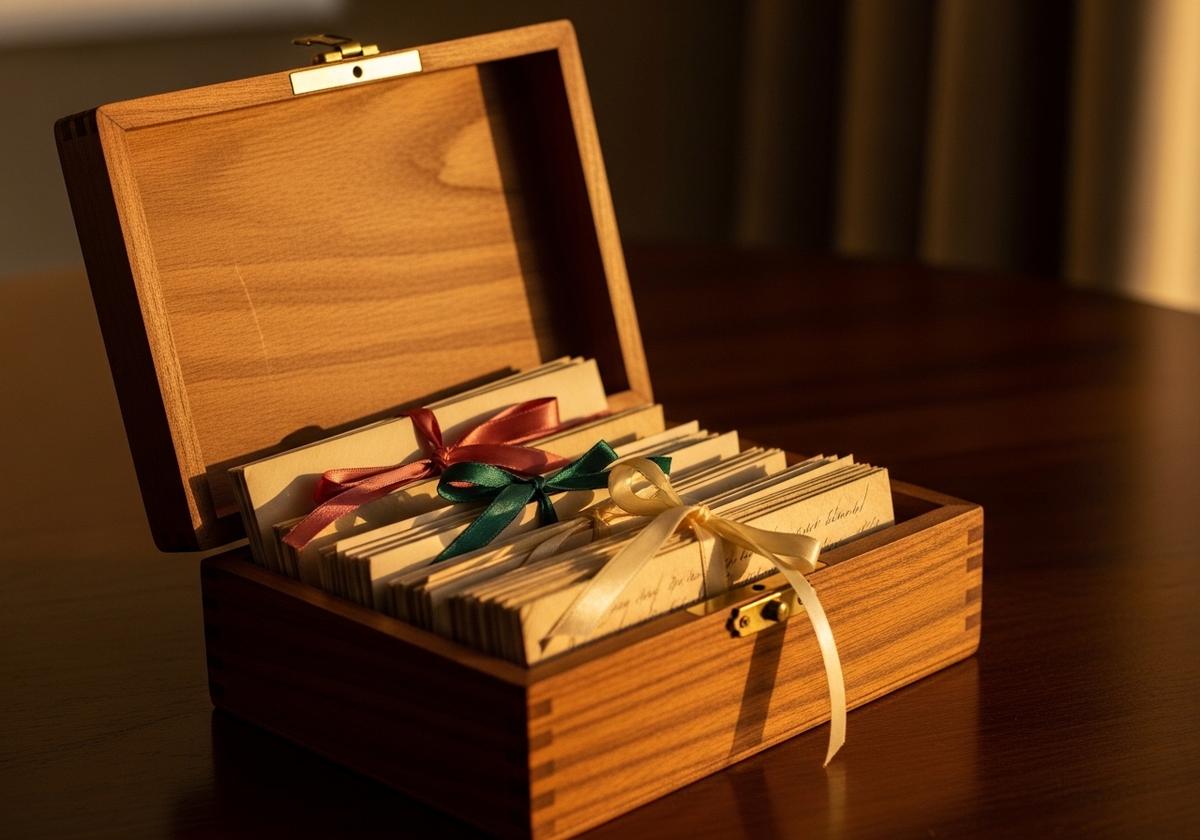
Keeping — the letter journal suits situations where contact is restricted or no-contact is in force. Write regularly, date and save each letter in a notebook or file, and give the whole collection later — at reconnection, an eighteenth birthday, a wedding. This honours the urge to communicate without breaching any rule or pressuring the child, and it builds the documented record of love. For many parents under court orders, this is the safest default. If you cannot send it, don’t stop writing it — one day you may hand your child not a single note but years of proof that you never once stopped loving them.
A word on the practical and legal side, stated plainly and not as legal advice. Never breach a court order or contact restriction; if you are unsure whether writing is permitted, get advice first. Keep dated copies of everything. And remember that anything you send can be produced in family court — so write every line as though a judge will one day read it, which is, conveniently, the very same standard as writing it lovingly and without attack.
Writing as a way through grief
The letter does one more thing, quietly, regardless of whether your child ever reads it: it helps you, and sits alongside the wider work of learning to cope with the loss. Naming the grief is the start. Psychologist Pauline Boss called it ambiguous loss — your child is alive but unreachable, a loss with no body, no funeral, and no closure, which is exactly what makes it so hard to carry.
Kenneth Doka named the other half: disenfranchised grief, the kind society does not recognise or know how to support. There is no sympathy card for a child who has been turned against you, so the grief is borne in silence. Writing to your child gives that silence a form. The research on targeted parents surviving alienation found these same two ideas — ambiguous loss and disenfranchised grief — at the very centre of what alienated parents endure.
It externalises love that has nowhere else to go, and it converts helpless waiting into a deliberate act. This is a grief with no funeral and no casseroles — and writing to your child is how you hold the service the world refused to hold.
What this article cannot promise
A few honest limits, because you deserve them. Every family is different, and nothing here guarantees an outcome — some children reconnect quickly, some take decades, some do not, and none of it is a measure of how much you loved them.
This is general guidance, not legal advice; if there are court orders, ongoing proceedings, or any abuse allegations in any direction, get advice from a qualified family-law professional before sending anything. And the guidance assumes the goal is a safe, loving relationship — if a child’s reluctance comes from genuine safety concerns rather than alienation, that is a different situation that needs professional support. What the letter can always do, in every one of those cases, is keep the light on.
Primary Sources Cited
The studies and foundational works behind this article. Every in-text citation links here, via its DOI or the primary source.
- Reczek, R., Stacey, L., & Thomeer, M. B. (2023) — Parent–Adult Child Estrangement in the United States. Journal of Marriage and Family 85(2). DOI 10.1111/jomf.12898.
- Bentley, C., & Matthewson, M. (2020) — The Not-Forgotten Child: Alienated Adult Children’s Experience of Parental Alienation. The American Journal of Family Therapy 48(5), 509–529. DOI 10.1080/01926187.2020.1775531.
- Harman, J. J., Kruk, E., & Hines, D. A. (2018) — Parental Alienating Behaviors: An Unacknowledged Form of Family Violence. Psychological Bulletin 144(12), 1275–1299. DOI 10.1037/bul0000175.
- Baker, A. J. L. (2007) — Adult Children of Parental Alienation Syndrome: Breaking the Ties That Bind. W. W. Norton.
- Boss, P. (1999) — Ambiguous Loss: Learning to Live with Unresolved Grief. Harvard University Press.
- Doka, K. J. (1989) — Disenfranchised Grief: Recognizing Hidden Sorrow. Lexington Books.

Frequently asked questions
Should I write to my alienated child even if they won't read it?
Yes — and the reason is not that you expect a reply. A letter is an act of faithfulness and a documented record that your love never stopped. Most parent–child estrangements are not permanent; in one large US study the majority eventually ended (about 81% of estrangements from mothers and 69% from fathers, in the general population, not parental-alienation cases specifically). And alienated children often re-examine the story they were given once they reach adulthood. The letter is what is waiting for them when that day comes.
What should I say in a letter to my alienated child?
Lead with warmth and love, plainly. Keep it short, make it age-appropriate, and share one concrete, warm memory that quietly contradicts the alienating story without arguing. Explicitly remove pressure — say they don't have to reply or do anything — and leave a standing, unconditional invitation: 'I'm here whenever you're ready.' Affirm that none of this is their fault. Every choice serves one test: does it make it easier for your child to stay connected to you without feeling they are betraying the other parent?
What should I NOT say in a letter to my alienated child?
Don't defend yourself at length or re-litigate the history. Above all, don't attack, correct, or contradict the other parent — that detonates the child's loyalty bind and they will defend the parent they depend on and harden against you. Don't demand a response or set conditions, don't flood them with messages, don't use the letter for logistics or money or conflict, and don't guilt-trip ('you're breaking my heart'). Each of these turns a gift into a burden or a test the child will avoid by disengaging.
Why does pressure and guilt backfire with an alienated child?
Because an alienated child is trapped in a loyalty bind: showing warmth to you can feel like betraying the parent they live with and depend on. Pressure, guilt, or demands force the child to choose a side — and under the alienating parent's influence, they will choose against you and dig in deeper. Low-pressure contact removes the bind. It lets the child stay connected to you without having to pick a side, which is the only safe position for them.
Should I send the letter or keep it?
Both are valid, and many parents do both. Send gentle, infrequent letters where there is a safe, lawful channel and no court order forbidding contact. Where contact is restricted, keep a 'letter journal' instead — write regularly, date and save each one, and give the collection later, at reconnection or a milestone birthday. This honours the urge to communicate without breaching any rules or pressuring the child, and it builds a documented record of love. Never breach a court order; if unsure whether writing is permitted, get advice first.
Can a letter to my child be used in court?
Yes — anything you send can be produced in family proceedings, so write every line as though a judge will one day read it. Conveniently, that is the same standard as writing it lovingly and without attack: warm about yourself, never negative about the other parent, no demands, no conflict. Keep dated copies of everything you write or send. If there are court orders, ongoing proceedings, or any abuse allegations in any direction, take advice from a family-law professional before sending anything.
How do I cope with the grief of not seeing my child?
Name it accurately. Psychologists call it ambiguous loss (Pauline Boss) — your child is alive but unreachable, a loss with no funeral and no closure — compounded by disenfranchised grief (Kenneth Doka), grief that society does not recognise or know how to support. Writing to your child is itself a grief practice: it externalises love that has nowhere else to go and turns helpless waiting into a deliberate act. Even a letter that is never sent does real work, for you as much as for your child.
Will my alienated child ever come back?
There are no guarantees and it can take years, but reconnection is more common than permanent rupture across the research on family estrangement, and alienated children frequently reach a point — often triggered by therapy, a milestone, or becoming a parent themselves — where they re-examine what they were told. Your task until then is to still be reachable and still loving when that day comes. The letters you keep, even the unsent ones, are the proof, waiting, that you never stopped.